

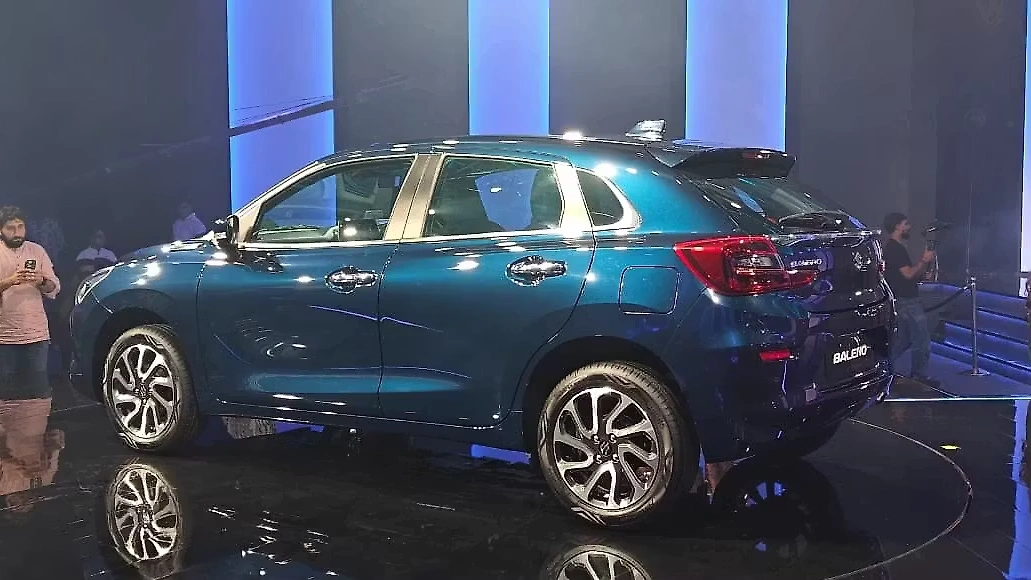
On September 5 Maruti Suzuki launched the Baleno’s mid-life update and referred to it as a cosmetic refresh even though there had been real changes. It now features a new engine together with a driver assist suite, something none of its competitors offer. There is also an automatic CNG variant which has never before been available on a Maruti car. For a hatchback that has for years been the safe and sensible choice at every NEXA showroom, that is no minor update.

What Actually Changed Under the Hood
Begin with the engine since this is the aspect that long-time owners will notice first. The previous model was equipped with a 1.2-litre four-cylinder petrol engine producing about 90PS and 113Nm – a smooth, familiar unit which, according to most people, was one of Maruti’s better small-capacity engines. That engine has now been replaced by the 1.2-litre three-cylinder Z Series unit which is already used in the Swift and Dzire and is rated at around 82PS. As having fewer cylinders generally results in a bit more vibration getting into the cabin at idle, it should come as no surprise if early reviews mention this. The advantage you receive is stronger low-end torque and better efficiency on paper. For the majority of Baleno buyers – those who make weekday commutes in the city and only occasionally go on highway journeys at weekends – this compromise is acceptable.
Price and Variants
The ex-showroom price begins at Rs 6.10 lakh and reaches up to about Rs 9.58 lakh for the top-end variant. The four trim levels — Sigma, Delta, Zeta and Alpha — all come with a manual transmission, while the AMT is available on the first three. One point to note is that these are the introductory prices for the festive season; Maruti usually increases the prices a little few weeks after the launch when the initial surge in bookings has subsided. So, if you’re looking at buying in November, you should check the price at the dealership rather than relying on the figures that are available online at that time.
Mileage, and the CNG-AMT Story
The manual petrol version has an ARAI rating of 23.8kmpl, while the AMT version is slightly better at 24.77kmpl. Both figures exceed the previous model’s 22.35 to 22.94kmpl range, which is a decent achievement since the new engine operates on E20 fuel—a type of fuel that typically hampers efficiency rather than improving it. Maruti has not yet released an official CNG mileage figure. The earlier CNG Baleno was rated at 30.61km/kg and, since the new engine is supposed to be more efficient overall, the new figure is likely to be higher than that. To be honest, the mileage itself isn’t the real point here—it’s that CNG customers finally have an automatic transmission available. All the factory-fitted CNG Balenos prior to this one came only with a manual gearbox. Anyone who has driven a CNG manual through Mumbai traffic will fully understand why that makes a difference.
Cabin and Everyday Features
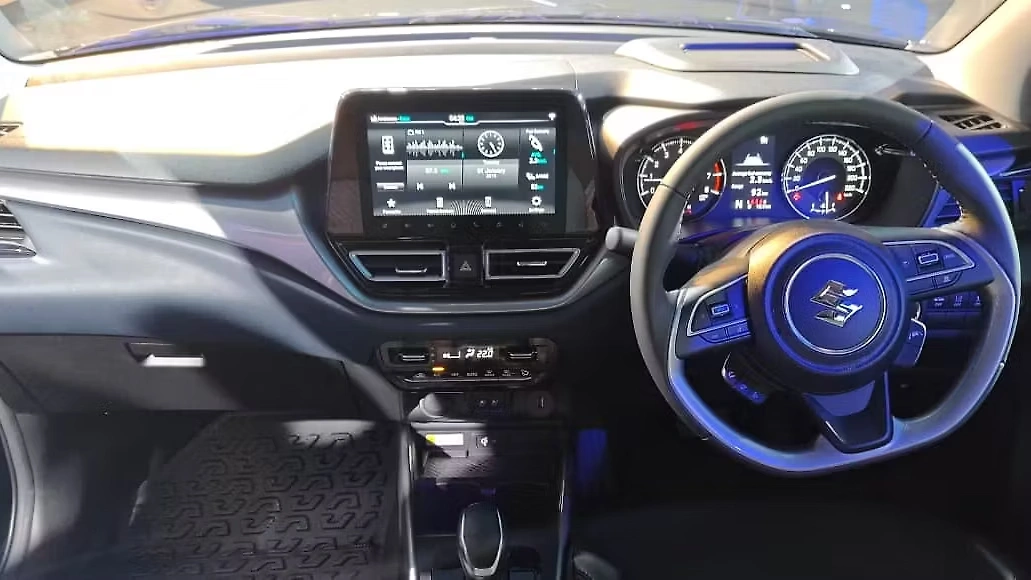
There won’t be any interior redesign since the layered dashboard, the analogue dials featuring a colour MID, the flat-bottom wheel, and the heads-up display are all being kept. The new features, although smaller in scope, are genuinely useful — they include a wireless charger with active cooling, a speaker system branded Clarion, and ventilated front seats, which is a first at this price level. If you sit on hot upholstery in a parking space in Delhi in June, you’ll understand why the ventilated seats aren’t just a gimmick. The things that are still missing are a sunroof and a rear centre armrest. People have been requesting both of these for years and, because of their absence, some customers still go directly to a Hyundai i20 showroom.
Safety Is the Real Headline
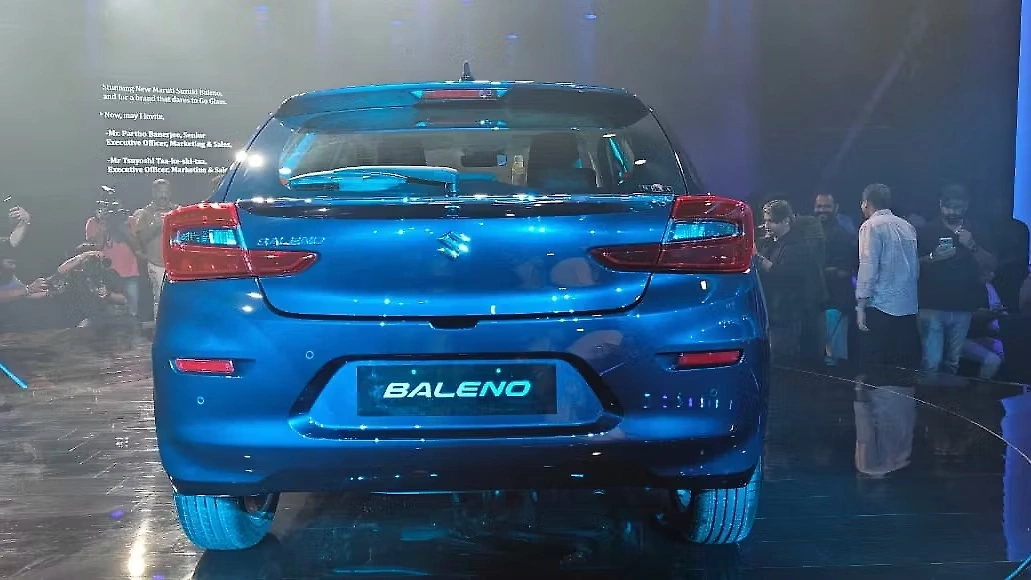
The update that is truly significant is the inclusion of Level 2 ADAS — comprising adaptive cruise control, lane keep assist, automatic emergency braking, and high-beam assist — which is now positioned behind a larger front grille covering the radar module. Unlike any of the Baleno’s direct competitors, this feature is not offered at a similar price point, a rarity for Maruti to achieve. All variants come with six airbags as standard, together with ABS with EBD, tyre pressure monitoring, and hill-hold assist. It is a different matter to consider whether Indian drivers actually make good use of ADAS on Indian roads. Nevertheless, the fact that it is listed in the specifications alters the way the car is discussed with those considering the i20 and Altroz.
Wheels, Tyres and What They Mean Day to Day
The Base Sigma trim comes with 15 inch steel wheels and 185/65 R15 tyres. The Delta, Zeta and Alpha models have 16 inch alloy wheels with 195/55 R16 rubber tyres. The larger wheels improve the appearance and have a slight effect on tightening up the handling, but the shorter sidewall does transmit more of the road surface, so this point should be considered if your commute involves more potholes than smooth roads. In the event that a rim cracks on a poor road – something that happens more often than owners expect – aftermarket options from wheel specialists such as Epic Wheels are available, and these come in various fitment so that you are not obliged to match the factory part exactly.
Who’s This Actually For?
If the kind of highway-assist technology you’re interested in is important to you, then it’s acceptable to give up a bit of engine refinement in order to get better fuel economy, and a CNG automatic seems like the missing element—the 2026 Baleno presents a better case than the previous model did. However, if a sunroof or a fully digital instrument cluster is a must-have, the i20 still comes out on top in that respect. For the majority of buyers, the value calculation has improved.

Be the first to comment
Leave a Comment
Please log in as a subscriber to leave a comment.
Login to Comment