
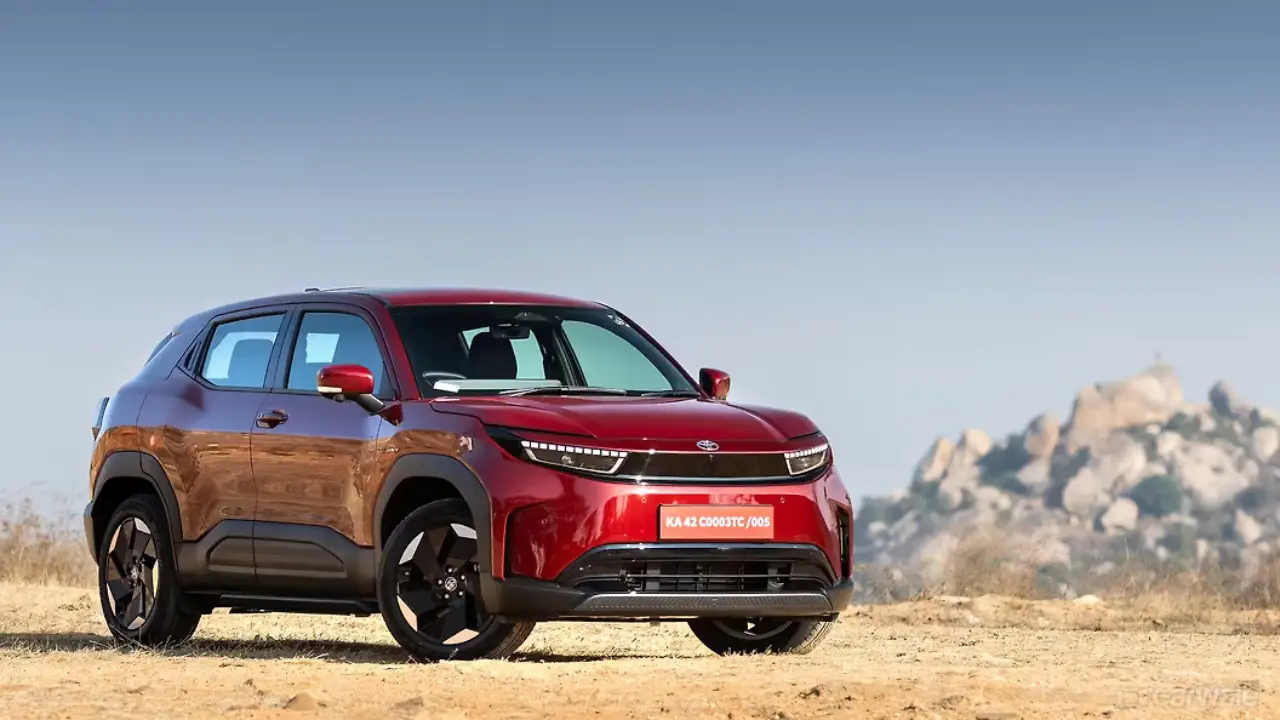
A 543 km range, Level 2 ADAS, and the trust of the Toyota badge — is this the electric SUV that finally convinces fence-sitters?
Toyota entering the electric vehicle space in India was never a question of “if” — it was always “when.” With the Urban Cruiser Ebella, that moment has finally arrived. And honestly? It’s a more considered, more mature EV than many expected.
The Indian EV market has been buzzing for a while now — Tata, Hyundai, MG, Mahindra have all staked their ground. So Toyota had to come with something solid. The Ebella builds on a dedicated electric platform. Let’s break down what it actually offer, and whether it deserve a spot in your shortlist.
A Design That Turn’s Heads — Mostly Up Front
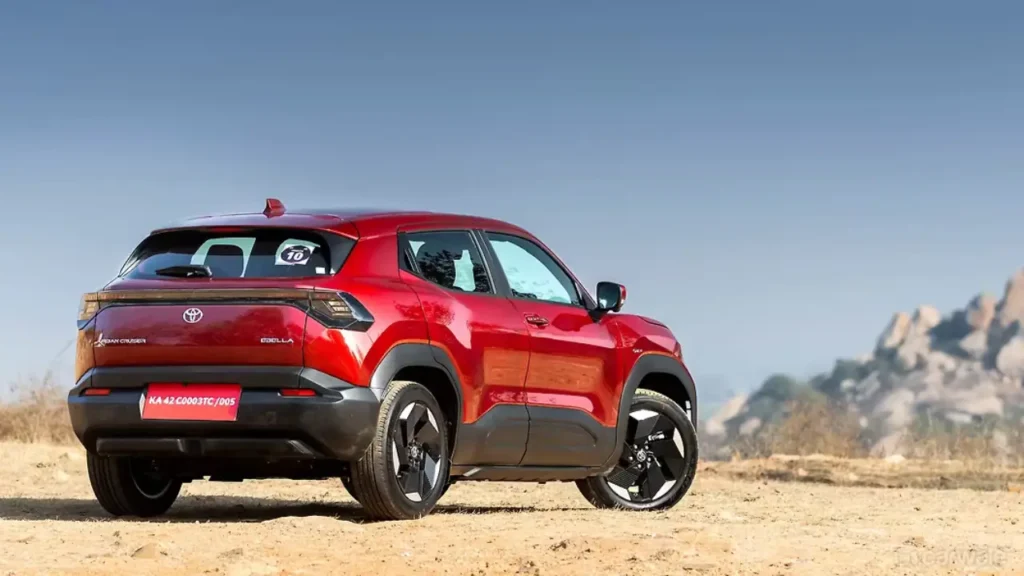
The Ebella’s front face is genuinely striking. Toyota calls it the “hammerhead” design — and the wide, aggressive headlamp setup with dotted LED DRLs does look sharp and modern. The swooping bonnet lines and air inlets give it a confident, almost sports-car-like presence at the nose.
However, the side profile is fairly upright and boxy — not a bad thing if you’re after an SUV feel, but it won’t win any styling awards from that angle. The rear, is a little flat and simple compared to the front. It is still a stylish car, although it just not an all round showstopper. The 18-inch alloy wheels comes standard in across all the variants and give it a premium look on the road.
Toyota offers the Ebella in nine colour options — five monotone shades (Bluish Black, Sportin Red, Cafe White, Enticing Silver, Gaming Grey) and four dual-tone combinations including an exclusive Land Breeze Green. Dual-tone is a good call if you want to stand out.
Inside: The Best Toyota Cabin Under 25 Lakhs
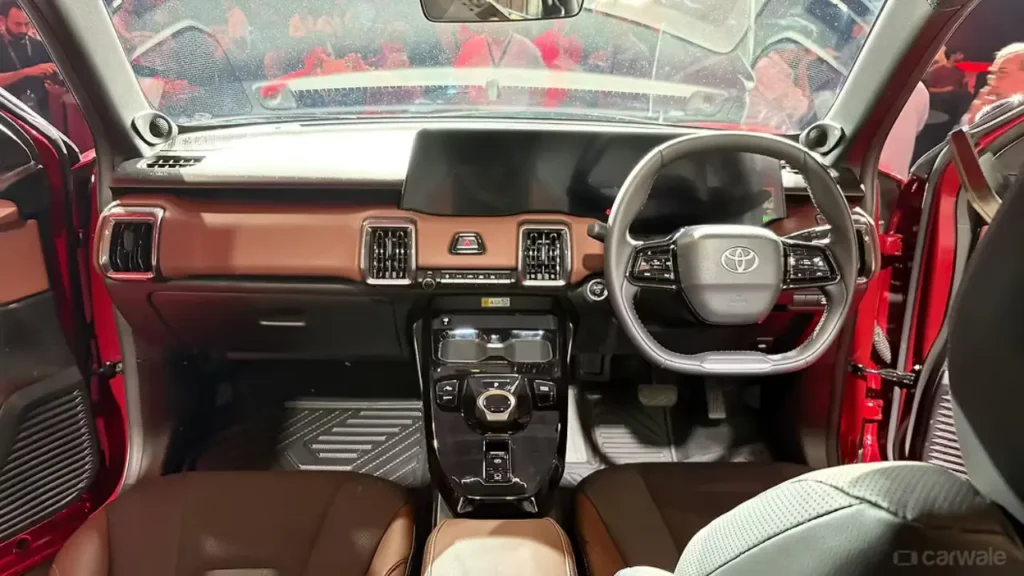
Step inside and the Ebella genuinely impresses. The cabin has a cohesive dual tone theme, squarish elements, and a thick central dashboard panel that feel deliberate rather than cluttered. The plastic quality is also well it is above the average we can see with smooth and texture surfaces where your hands rest, solid buttons, and stalks that feel satisfying.
The two-spoke squircle steering wheel is a distinctive design choice, and the 10.1-inch infotainment screen sits neatly in the dash with wireless Android Auto and Apple CarPlay. Pair that with a 10.25-inch digital driver display, a JBL premium sound system with punchy bass, and ambient lighting around the door trims — and this interior is genuinely a step up for Toyota in India.
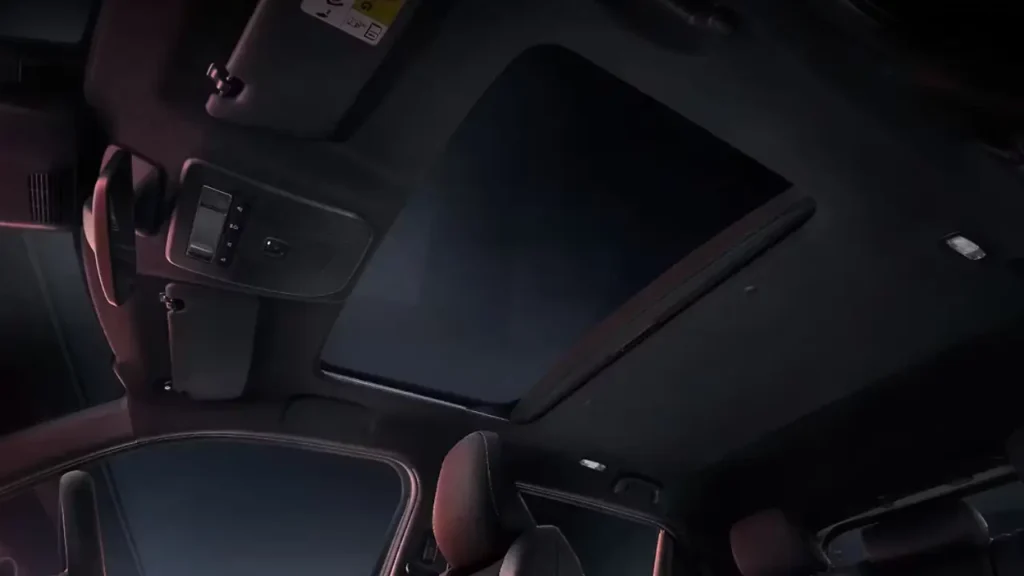
The front seats are comfortable for most body types, with 10-way adjustment for the driver seat and ventilation on both front seats — welcome for Indian summers. The panoramic glass roof adds a sense of openness, though the glass panel itself is fixed (not a powered sunroof).
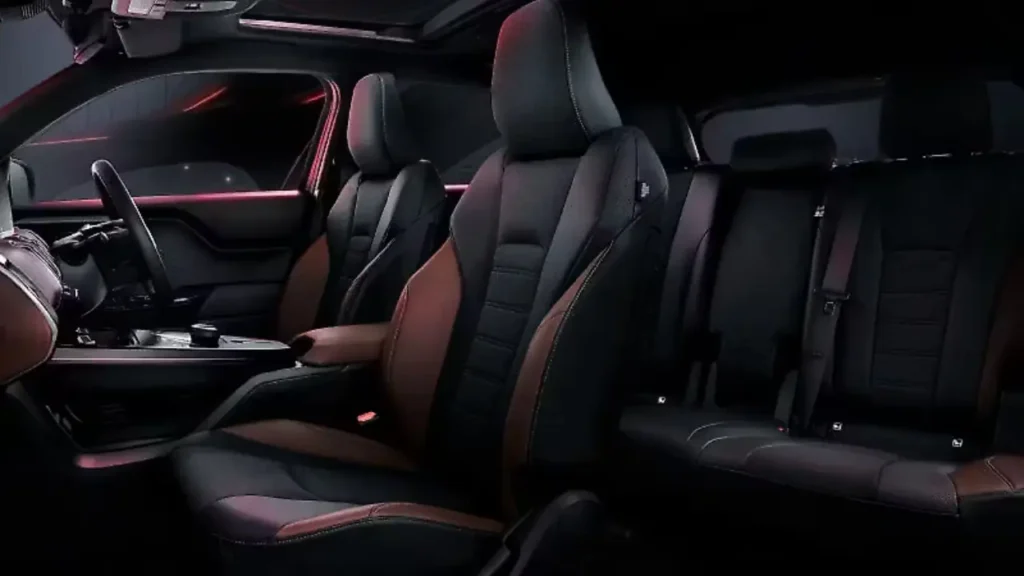
“The cabin of the Toyota Ebella is the best Toyota has offered at this price point — purposeful, premium, and surprisingly well-finished.”
The rear seats tell a different story. Because its battery sits under the floor, the floor itself is higher, which means getting in and out requires lifting your knees a bit more than usual practice. Headroom is just about fine for average-height passengers, but underthigh support is on the shorter side — something taller passengers will notice on longer drives. It’s fine for city use, but don’t expect the rear bench experience of an MG Windsor.
Boot space is rated at 310 litres — decent, but not segment-leading. The 40:20:40 split rear seats help with practicality if you need to load something longer.
Performance: Smooth, Calm, and Effortless to Drive
The Ebella comes in two battery options — a 49 kWh pack (440 km range, 144 PS) and the flagship 61 kWh pack (543 km range, 174 PS). Both produce 193 Nm of torque, which in EV terms means instant pull from a standstill — great for city driving and highway overtakes.
Battery & Performance Specs
- Battery Type Lithium Iron Phosphate (LFP)
- Battery Options 49 kWh / 61 kWh
- ARAI Range 440 km / 543 km
- Motor Power 128 kW (174 PS)
- Torque 193 Nm
- Drive Type Front-Wheel Drive (FWD)
- DC Fast Charging (10–80%) ~45 minutes
- AC Wallbox Compatibility 7.2 kW
- Real-World Range (61 kWh) ~400–440 km (moderate driving)
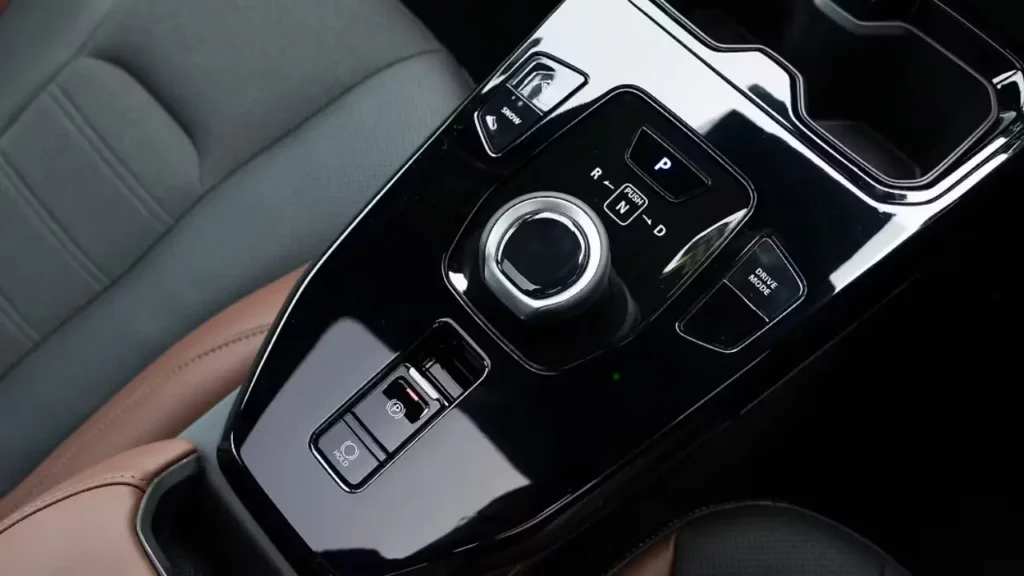
What sets the Ebella apart is how approachable the drive feels. Toyota has deliberately tuned the throttle response very smooth and natural. Even the regenerative braking transitions are feel gentle. Three drive modes (Eco, City, Sport) let you dial in the right feel depending on whether you’re riding through a traffic or cruising on the expressway.
One genuine irritant: you can’t change the level of regenerative braking while the car is moving. There are no paddle shifters, and you have to stop the car to adjust the regen level. For a car at this price, that feels like an oversight — especially when a dedicated button for one-pedal mode does exist.
Ride quality is comfortable in the city with City mode, but over sharp highway joints or fast speed breakers, the rear suspension can feel a bit unsettled. The Ebella is a heavy car 1815kg , and the suspension doesn’t always mask that weight at higher speed. Handling is stable and confident.
Safety: 7 Airbags Standard, Level 2 ADAS on Top
Seven airbags come standard across all variants — driver, passenger, front side, curtain, and driver knee. That’s a strong baseline. The top E3 variant adds Level 2 ADAS features including adaptive cruise control, lane keep assist, blind spot monitor, rear cross traffic alert, and a pre-collision system.
A 360-degree camera is also offered on the E3, though it’s worth noting — the image quality is a bit grainy, especially at night. It’s usable, but rivals at this price point do better. The Ebella hasn’t been crash-tested by a global agency yet, but its twin — the Maruti Suzuki e Vitara — has scored 5 stars in Bharat NCAP, which is a reassuring indicator.
Tech & Connectivity: The i-CONNECT System
The Ebella equipped with Toyota’s i-CONNECT connect car system. From app, you can check battery status, schedule charging, remotely control the AC and seat ventilation, lock/unlock doors, and even set up geo-fencing alerts for a secondary driver. There is also smartwatch connectivity feature and Siri support — neat touche that make everyday EV ownership more convenient and satisfying.
The wireless smartphone charger is a welcome addition, and USB sockets (Type-A and Type-C) are available for both front and rear passengers. An air purifier with PM2.5 filter is also included — thoughtful for city dwellers dealing with pollution.
Which Variant Should You Pick?
E1
~₹18 Lakh · 49 kWh
Full LED lights, 18-inch alloys, 10.1″ infotainment, 7 airbags, wireless CarPlay/Android Auto. Great entry-level package.
E2
~₹19.5 Lakh · 61 kWh
Adds the bigger 61 kWh battery + rear parking camera. Pick this only if range anxiety is your primary concern.
Best Pick
E3
~₹21 Lakh · 61 kWh
Full package — 10-way powered seat, ventilated seats, JBL audio, 360° camera, Level 2 ADAS, panoramic roof, dual-tone.
Honest Pros & Cons
What We Like
- Sharp hammerhead front design
- Best Toyota cabin at this price
- Smooth, approachable EV driving experience
- 543 km ARAI range (real world ~420 km)
- 7 airbags standard across all variants
- Toyota reliability & service network (500+ BEV touchpoints)
- Solid connected car features via i-CONNECT
What Could Be Better
- Rear underthigh support is below average
- Regen braking can’t be changed while driving
- 360-degree camera quality is grainy at night
- Boot space (310L) modest for the class
- Rear seat ingress can be tricky for elderly
- Ride stiffens at higher speeds
Frequently Asked Questions
Q – Is the Toyota Urban Cruiser Ebella a fully electric car?
A – Yes, completely. The Ebella is built on a dedicated BEV-only platform — there are no petrol or hybrid variants planned on this platform. It’s Toyota’s first pure EV for the Indian market.
Q – What is the real-world range of the Ebella’s 61 kWh battery?
A – Toyota claims 543 km (ARAI certified), but real-world range with moderate driving tends to be around 400–440 km. With a heavier foot, expect closer to 350–370 km. Still excellent for most Indian use cases.
Q – How long does it take to charge the Ebella?
A – With DC fast charging, the car goes from 10% to 80% in roughly 45 minutes. For home charging, the 7.2 kW AC wallbox charger takes around 8–9 hours for a full charge overnight — completely manageable if you plug in before sleeping.
Q – What warranty does Toyota offer on the battery?
A – Toyota offers 8 years or 2,00,000 km (whichever comes first) on the LFP battery pack, and 3 years or 1,00,000 km on the vehicle itself. The battery warranty is one of the most reassuring ownership aspects of the Ebella.
Q – How does the Ebella compare to the Hyundai Creta Electric?
A – The Creta Electric offers a more comfortable rear seat experience and a few extra ADAS features, but the Ebella counters with the larger battery option (61 kWh vs Creta’s 51.4 kWh), better claimed range, and Toyota’s unmatched after-sales trust in India. It really depends on whether you prioritize ride comfort or range and ownership peace-of-mind.
Final Verdict
The Toyota Urban Cruiser Ebella isn’t the flashiest EV on the market, nor is it the most thrilling to drive. But it gets the important things right — long range, a genuinely premium cabin, solid safety, and backed by Toyota’s extensive service network. For someone who wants their first EV to feel reliable and stress-free, the Ebella is a very easy recommendation. The E3 variant, if budget allows, is the one to go for.
Be the first to comment
Leave a Comment
Please log in as a subscriber to leave a comment.
Login to Comment