
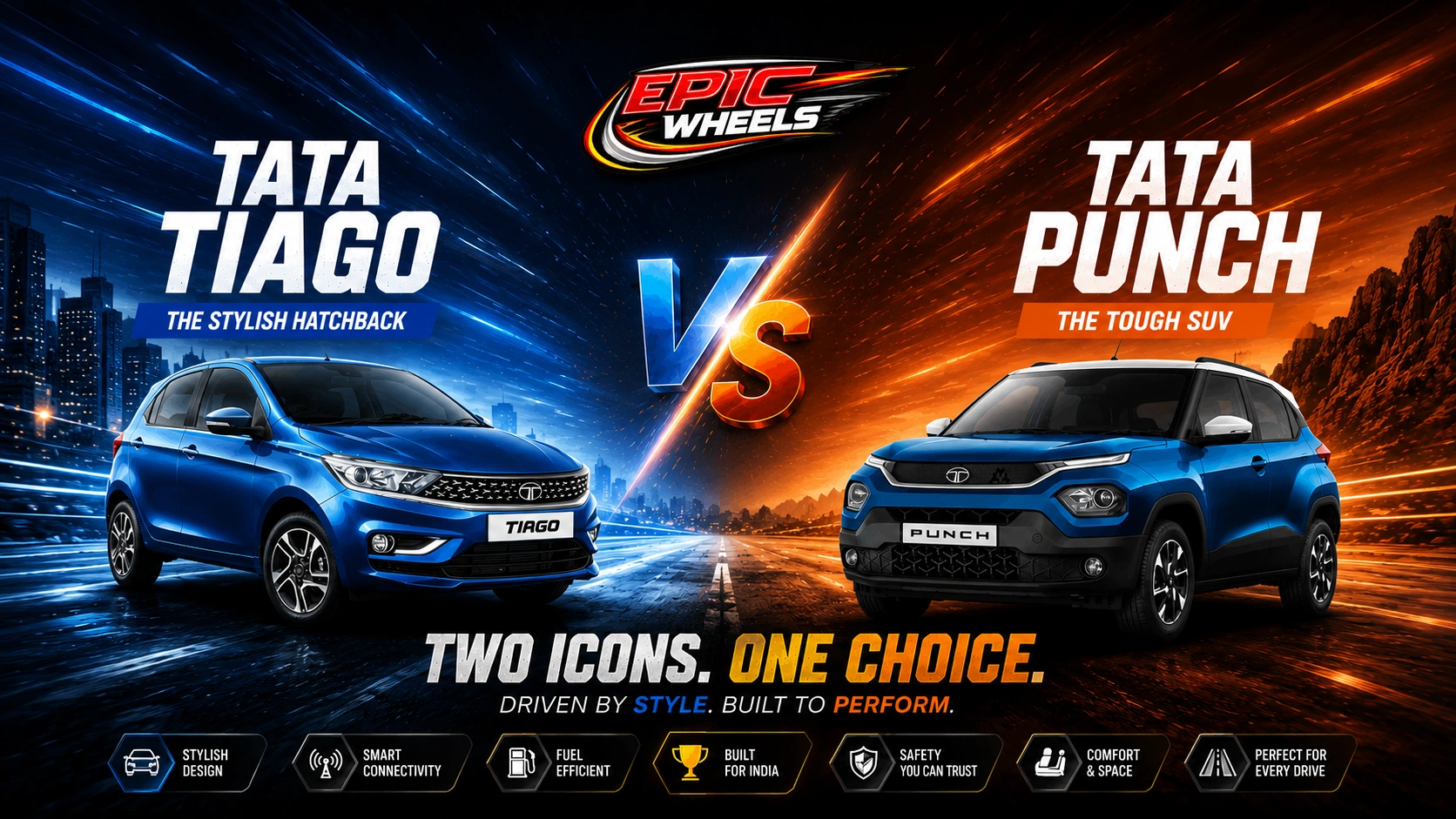
What Is The Real World Choice from the Tata Tiago vs Tata Punch?
If you walked in a Tata’s showroom with a budget of ₹6 lakh to ₹10 lakh and you will be going to face a very specific dilemma. The Tiago and the Punch will parked right next to each other having the exact same platform layout with the same 1.2-liter engine.
On paper they look like sibling rivals. But in reality they are two completely different version for two different jobs.
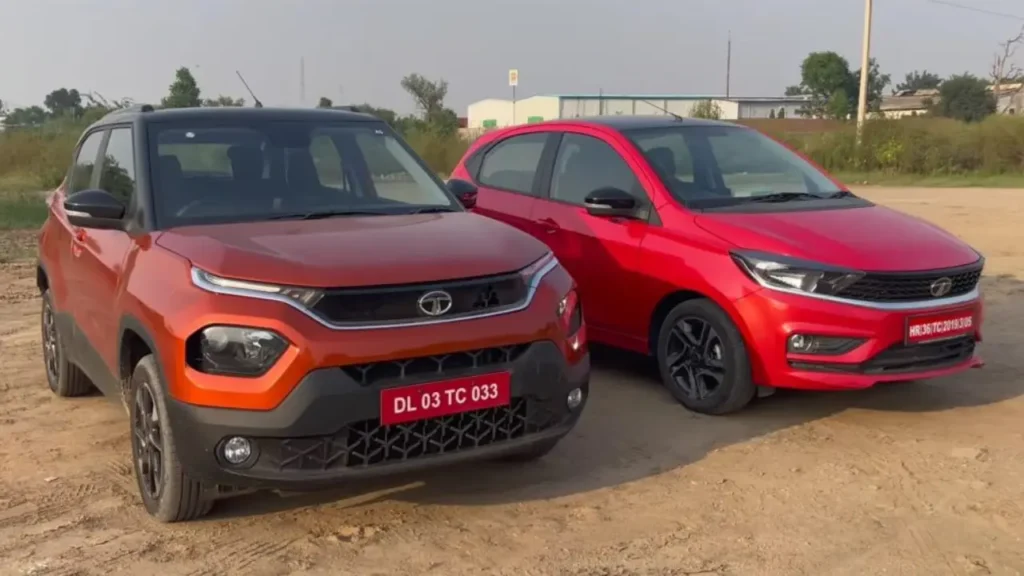
The Tiago is the traditional, sharp-suited hatchback that Tata recently sharpened up to look a whole lot like the premium Altroz. The Punch, on the other hand, is the high-riding micro-SUV that has taken the Indian market by storm purely because it looks like a baby Harrier and promises to swallow potholes for breakfast.
Having driven both through cramped city bypasses and open highway stretches, let’s skip the marketing fluff and look at what it’s actually like to live with these two cars.
The Price Layout: Where Does Your Money Actually Go?
Between all the Tata’s Car variant nomenclature can be a headache with its Smart, Pure, Adventure, and Accomplished trims name, but the financial math is pretty straight forward.
If you go for Tiago the ex-showroom price is roughly around ₹5.60 lakh for the bare bones version, for the top-tier variant goes up to around ₹8.50 lakh. The Punch a clear premium which is starting price is ₹6.10 lakh and top variant goes ₹10 lakh for the fully loaded model with all the bells and whistles.
When it comes to the on road price, choose a mid range TATA Punch usually cost about ₹1 lakh to ₹1.2 lakh more than a similarly equipped Tiago.
Finding the Value Sweet Spot
If you are leaning toward the Tiago, don’t look past the Pure Plus or Creative trims. They give you the updated digital instrument cluster and the dual-deck wireless phone charging setup without pushing the price tag into the next segment’s territory.
For the Punch, the Adventure (S) variant is the smartest pick. It gives you the everyday creature comforts you actually want, including the sunroof that everyone seems to love, without forcing you to pay for the expensive, top-tier Accomplished trims.
Curb Appeal: Street Presence vs City Nimble
| Stance & Viewport | |
|---|---|
| Tiago: Low & Sleek | Punch: High & Upright |
| Ground Clearance: 170mm | Ground Clearance: 193mm |
| Hub-to-eye height: Low | Hub-to-eye height: High |
| Nose-line: Sloped down | Nose-line: Flat / Commanding |
The Tiago’s recent cosmetic surgery has done it wonders. It dropped the old, rounded, friendly commuter look for sharp lines, a sleeker grille, and a set of angular headlights that make it look wide and planted. It is a handsome hatchback but it still sit low to the ground on 14-inch wheel. It look right at home in tight parallel parking spot and narrow lanes.
The Punch win the battle of road presence. It still tall with a flat, aggressive bonnet line, heavy plastic body cladding around the wheels and an unladen ground clearance of 193 mm.
When you slide behind the wheel of the Punch you are looking over the hood of standard hatchback, not at their bumper level. If you hate the feeling of being dwarfed by traffic or constantly worrying about scraping the underbody on poorly designed speed breakers, the Punch’s stance immediately justify it is premium.
Living Inside the Cabin: Space, Comfort, and Everyday Quirks
The difference in ride height completely changes how these two cabins feel on a daily basis.
Getting into the Punch is remarkably easy because Tata designed the doors to pop open to a full 90-degree angle. If you frequently travel with elderly parents or need to wrestle a child seat into the back, you will bless this design choice every single day. You slide straight onto the seats rather than crouching down into them.
Once inside, the Punch feels noticeably airier. The upright dashboard contrasting trim insert, and larger glass area give it an expansive feel. Because of the wider tracks and longer 2445 mm wheelbase, three adults can actually sit in the back seat without turning it into an intimate wrestling match. Plus you get dedicated rear air vent on the mid to high variant, which is a massive relief during peak summer.
The Tiago feels more like a cozy cockpit. The materials are hard plastic—which is standard for this price point—but the textures feel decent to the touch. Tata added a dual deck wireless charging pad up on front which is incredibly convenient if both driver and passenger need a top up.
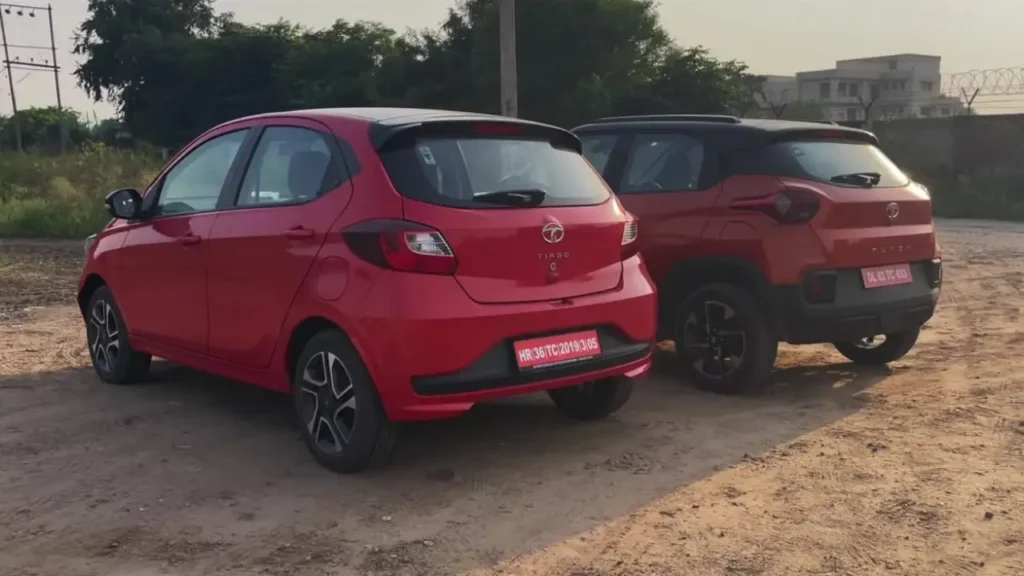
The big drawback for the hatchback is back-seat legroom and trunk space. The Tiago’s 242-liter boot is fine for grocery runs, but it gets tight quickly if you throw in a couple of full-sized suitcases. If you look at the CNG versions, the Punch retains a usable 210 liters of space thanks to Tata’s twin-cylinder tech hidden under the floor, whereas the Tiago’s boot effectively disappears.
Behind the Wheel: Performance, Manners, and Potholes
This is where the rubber meet the road, and where the shared DNA become interesting. Both car use Tata’s 1.2-liter, three-cylinder Revotron petrol engine, making roughly 85 to 87 horsepower. The TATA Punch carry more weight and push more air, they drive like two entirely different variation.
The Daily City Grind
Around the town Tiago is the more energetic companion. Because the engine does not have to work as hard to get off the line. You can slot it into third gear and lazy commute through moderate traffic without constant downshifting. Combine that with a tight 4.9-meter turning radius and it feel like a nimble urban go-kart.
The Punch requires a more deliberate driving style. It feels a bit heavy off the mark, and you’ll find yourself working the manual gearbox a bit more to keep it in its power band when climbing inclines or overtaking quick traffic. However, the trade-off is how it handles bad roads. The Punch uses a suspension setup with features like “Flip-Stall” control that smoothens out rough patches beautifully. Where a Tiago driver will slam on the brakes for a jagged patch of tarmac, a Punch driver can maintain speed and glide right over it.
Highway Manners and the Refinement Issue
Let’s be honest about the engine: three-cylinder motors have an inherent thrum, and you will hear it in both cars. When you push past 3000 RPM to make a highway pass the engine note get quite vocal inside the cabin.
On the open road the Tiago will happily cruise at 100 km/h and deliver great fuel efficiency frequently hit 17–18 km/l if you keep a steady foot. The Punch is less aerodynamic so highway mileage drop a bit closer to 15–16 km/l but it feel incredibly stable at high speed. It doesn’t get easily unsettled by crosswinds or passing heavy truck.
A Note on the Automatic (AMT): If you hate clutches, both cars offer a 5-speed AMT. It isn’t a lightning-fast sports gearbox, but for commuting, it gets the job done cleanly. Interestingly, if you go for the Tiago CNG AMT, Tata actually gives you paddle shifters to manually override the gears—a neat touch for overtaking on single-lane roads.
Safety: The Tata Strongsuit
If there is one reason Tata is dominating this price segment, it’s peace of mind. Both of these cars feel like tanks compared to older Japanese or Korean rivals in the budget class.
Tata has standardized 6 airbags across the board for both the Tiago and the Punch, alongside Electronic Stability Program (ESP) and Hill Hold Assist.
The underlying structures are where they diverge slightly. The Punch is built on the newer ALFA architecture, which secured a flawless 5-star safety rating. The Tiago sits on a heavily revised version of its older platform, which holds a very respectable 4-star rating. Whichever way you go, you are getting a structurally sound shell that protects your family far better than most options in this price bracket.
The Honest Pros and Cons
Tata Tiago
The Good: Cheaper to buy, noticeably more agile in tight city spaces, better real-world fuel economy, and easier to park.
The Bad: Tight rear legroom for tall passengers, small trunk space, and the engine feels noisy when worked hard.
Tata Punch
The Good: Commanding SUV driving position, fantastic ground clearance for rough terrain, easy cabin entry/exit, and a solid 5-star safety rating.
The Bad: Can feel underpowered when fully loaded with five passengers and luggage; top variants get expensive enough to compete with larger sub-compact SUVs.
The Verdict: Which One Belongs in Your Driveway?
To make this simple, let’s look at your daily routine rather than the spec sheets.
Go with the Tata Tiago if:
Your driving is 90% urban. If you are navigating tight parking structures, tackling a solo daily office commute, or looking for the absolute maximum feature list for every rupee spent, the hatchback makes total practical sense. It’s quicker on its feet in traffic and easier on the wallet at the fuel pump.
Go with the Tata Punch if:
This is your primary family car. If you regularly carry passengers in the back seat, love weekend road trips, or live in an area where the roads look like obstacle courses, pay the premium for the Punch. The extra cabin space, easier entry, large boot, and pothole-flattening suspension make it a far more versatile vehicle for long-term ownership.

Be the first to comment
Leave a Comment
Please log in as a subscriber to leave a comment.
Login to Comment