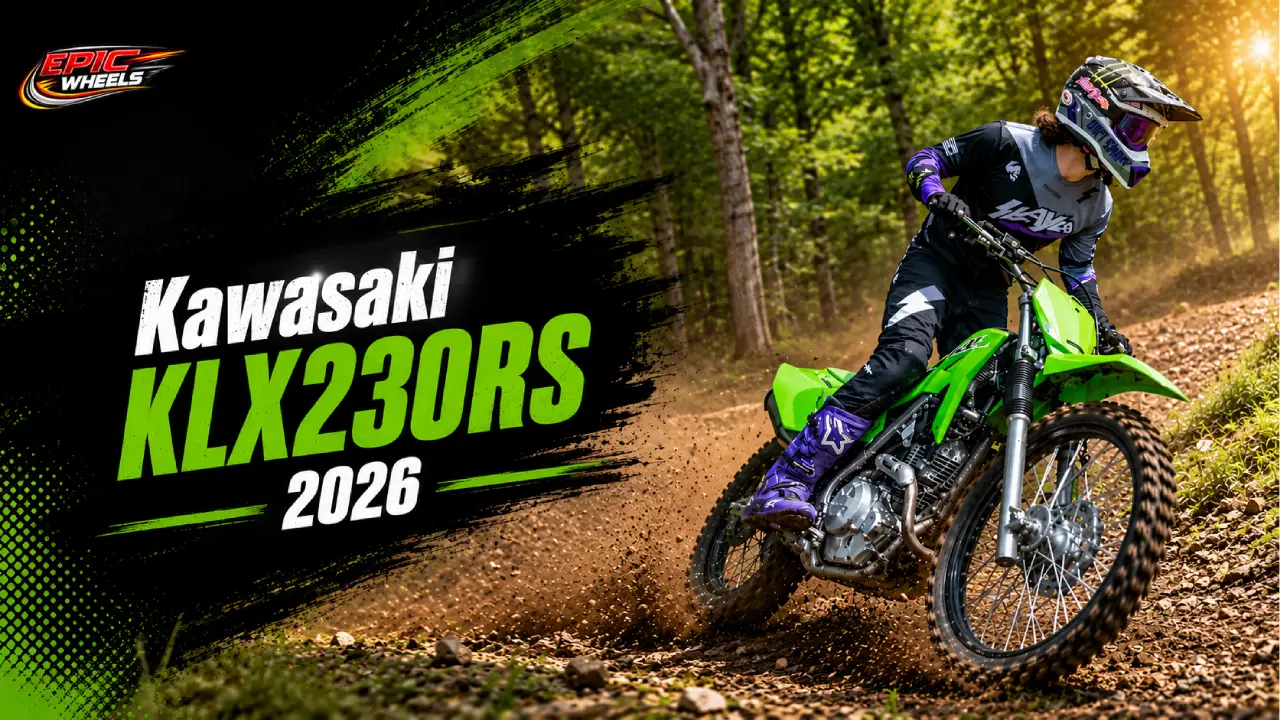
Let’s be honest wrestling a heavy adventure bike through a muddy road rutted-out trail isn’t always fun. Half the time, you’re just praying you don’t drop a 400-pound machine on your leg. If you’ve been looking for something that skips the heavy road-legal fluff and focuses entirely on pure, unadulterated dirt riding, the Kawasaki KLX230R S is a bike you need to look at.
This isn’t a dual sport which will compromise between highway asphalt and forest trail. It’s a dedicated, off road machine which meant for throwing around on weekends exploring tight single tracks or just learning the ropes of dirt ride without the intimidation factor of a high-strung race bike.
Stripped Down and Built to Drop
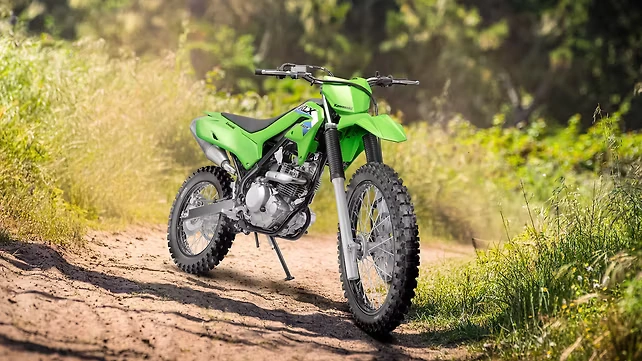
The very first thing you notice about the KLX230R S is what’s missing. There are no mirror no bulky turn signals no heavy headlight assembly, and no license plate holder to snap off the first time you watch out the corner. Because Kawasaki strip away all the street gear, the bike hit the scales at just 129 kg.
On paper, this might be sound like a number but out on the trail, it means a lot. It means when you get stuck in a tight spot between a couple of boulders, you can actually muscle the bike around without blowing out your back. And if you happen to tip over—which we all do—picking it back up doesn’t drain all the energy you needed for the rest of your ride.
The Engine: Tractable, Simple, and Bulletproof
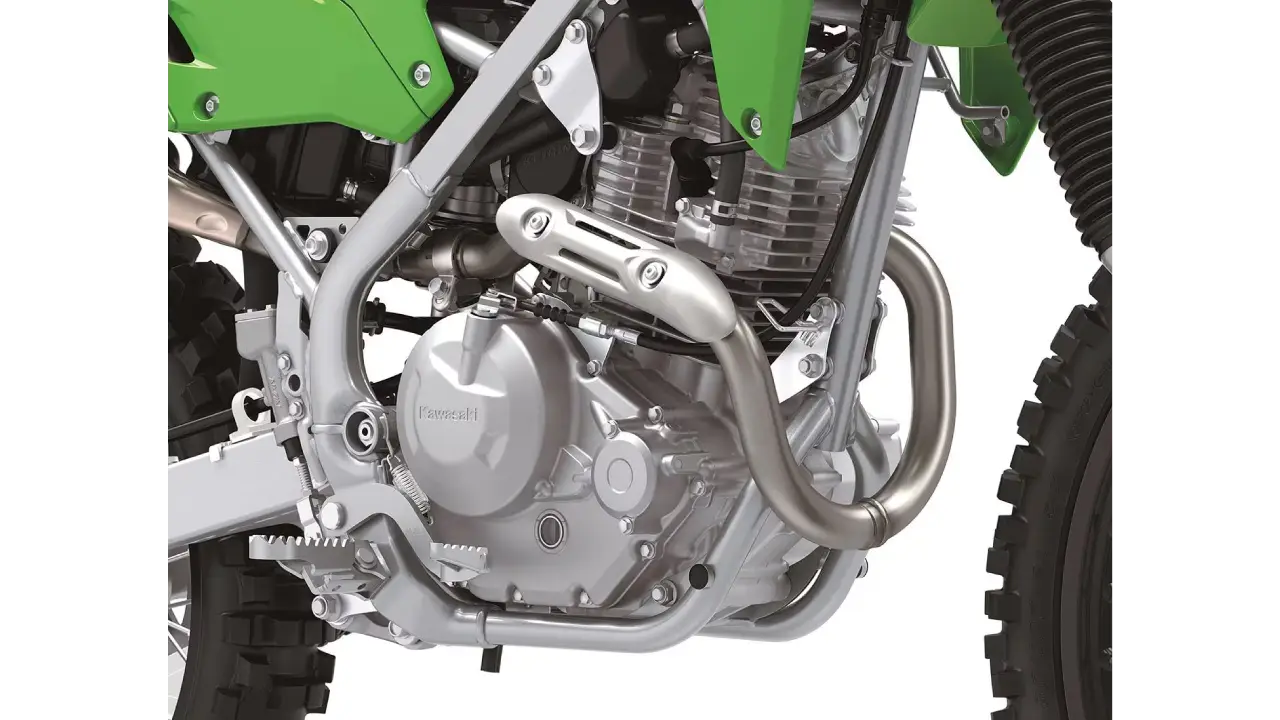
When you look at the technical side of Kawasaki, it didn’t build a high maintenance racing engine. Instead, you get a 233cc, single-cylinder, four-stroke motor that put out about 19.57 bhp and 20.6 Nm of torque.
Now, those numbers won’t win you a local motocross championship, but that’s completely missing the point. The beauty of this air-cooled engine is how it delivers that power. It’s incredibly smooth right from the bottom of the rev range. If you are climbing a steep, loose incline, the bike just chugs along, finding traction where sharper race bikes would just spin the rear tire and dig a hole.
Plus, because it’s fuel-injected, you don’t have to mess around with carburetor jets when the weather changes or you haul the bike up into the mountains. You just hit the electric start button, and it fires right up. And since it’s air-cooled, there’s no radiator to puncture if a stray branch pokes through the shroud.
Why the “S” Version Actually Matters
Standard dirt bikes can be intimidatingly tall. If you’re not six feet tall, trying to touch the ground on an enduro bike can feel like a balancing act on a tightrope.
That’s where the “S” designation comes in. Kawasaki purposely shortened the suspension travel just enough to drop the seat height down to 900mm. While that still sounds high for a street rider the bike is so narrow that it feels much lower letting you easily plant a foot down when you lose your balance on an uneven trail.
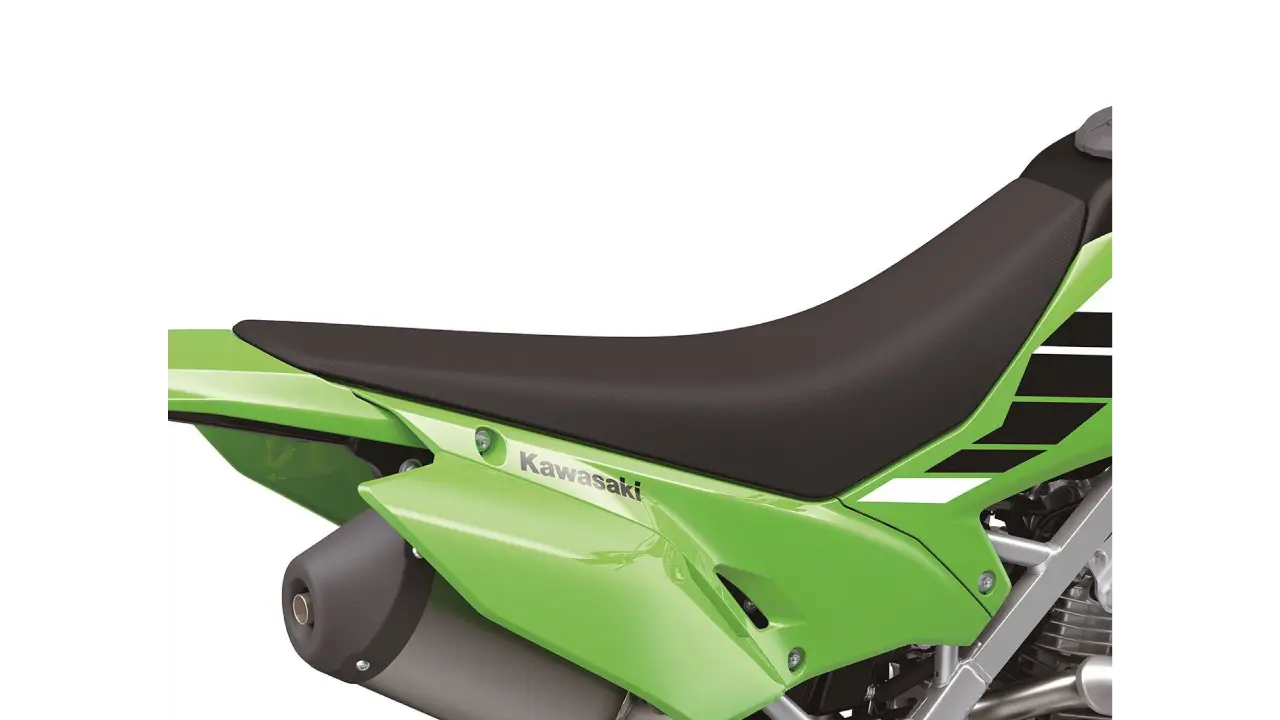
They also updated the seat with slightly thicker foam and shifted the handlebars forward just a bit. This sounds like minor marketing talk, but it actually changes how the bike handles. When you stand up on the pegs to go over a log or ride through deep ruts, your weight is perfectly centered, giving you a massive confidence boost.
You get 21-inch front and 18-inch rear wheels—the standard for proper off-road riding—which means you can roll right over rocks and tree roots without getting deflected. Stopping power comes from simple petal disc brakes without any ABS, allowing you to intentionally lock up the rear wheel to slide through tight switchbacks.
The Reality Check
Is it perfect? No. If you want to ride from your house directly to the trail this isn’t the bike for you because you can’t legally register it for the street.
But if you have a way to transport it to your local riding spot or track, it is one of the most low-maintenance, reliable, and genuinely fun ways to get dirty. It bridges the gap perfectly between small play bikes and expensive, high-maintenance racing machines.
Be the first to comment
Leave a Comment
Please log in as a subscriber to leave a comment.
Login to Comment