
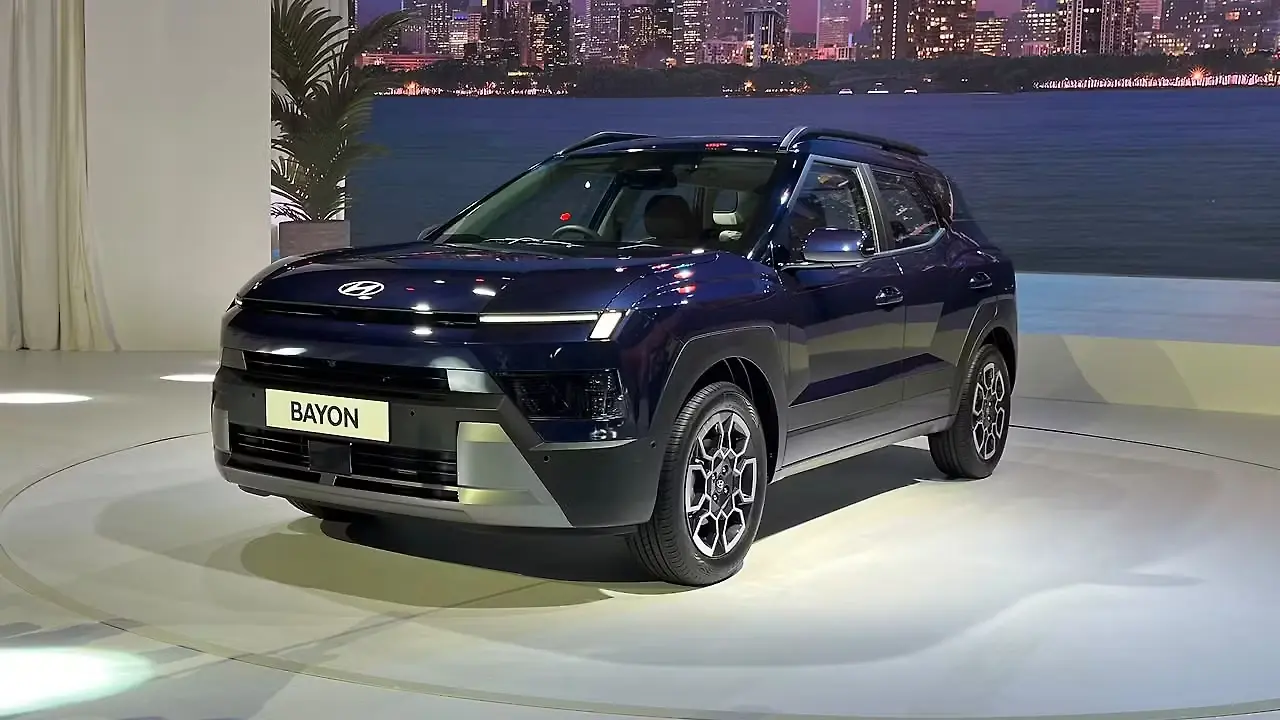
The Venue feels a size too small. The Creta feels a few lakh too expensive. If you’ve been stuck in that exact spot, Hyundai has built a car just for you, and it’s called the Bayon.
Launched on 26 October 2026 at a starting price of ₹10 lakh (ex-showroom), the Bayon slots right between Hyundai’s two best-sellers. It isn’t a rebadged European hatchback-on-stilts either. The India-spec car shares only its name with the Bayon sold abroad, with a completely different body and interior. Here’s what it gets right, where it cuts corners, and which variant actually makes sense.
Where the Bayon fits (and why Hyundai built it)
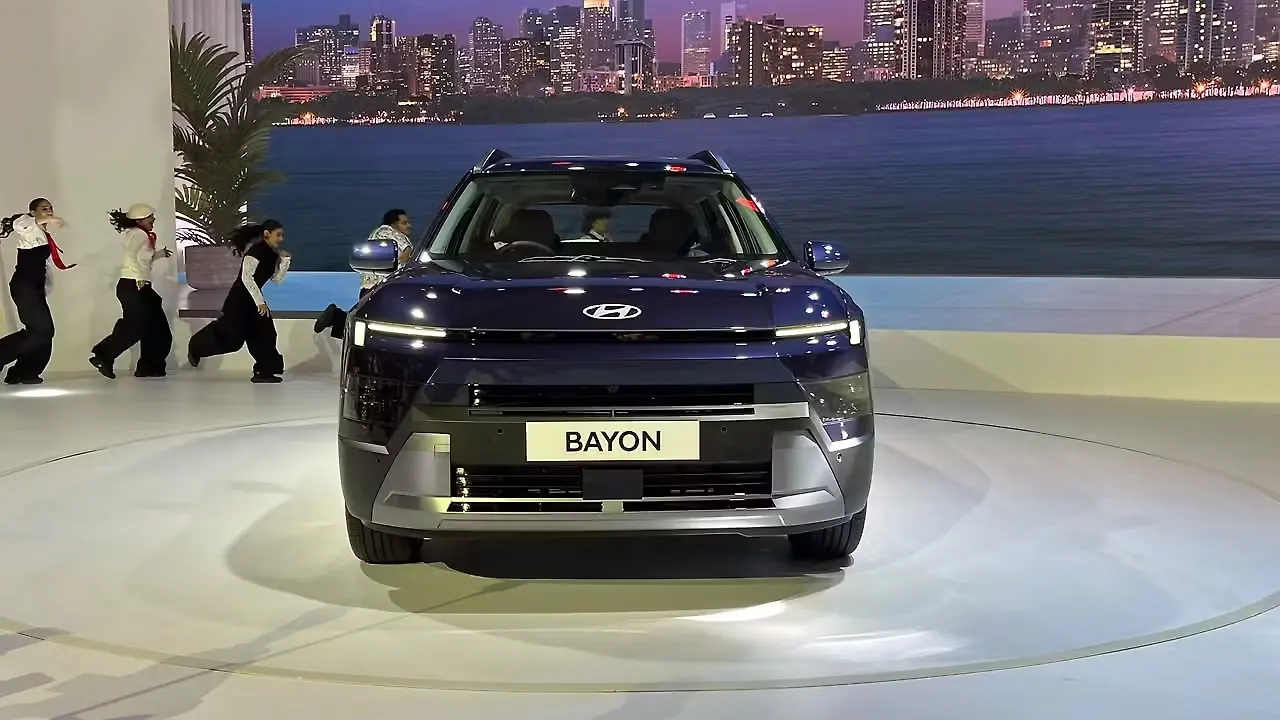
Think of the Bayon as the “Creta Lite”. It sits on Hyundai’s Global K Enhanced platform, is built at the Chennai plant (in both left- and right-hand drive, because it’s going global), and undercuts the Creta by up to ₹91,000 at the entry level.
The numbers tell you it’s not a small car:
- Length: 4,245mm (85mm shorter than the Creta)
- Width: 1,810mm (actually 20mm wider than the Creta)
- Wheelbase: 2,600mm, just 10mm less than the Creta
- Ground clearance: 205mm, which handles Indian speed breakers with room to spare
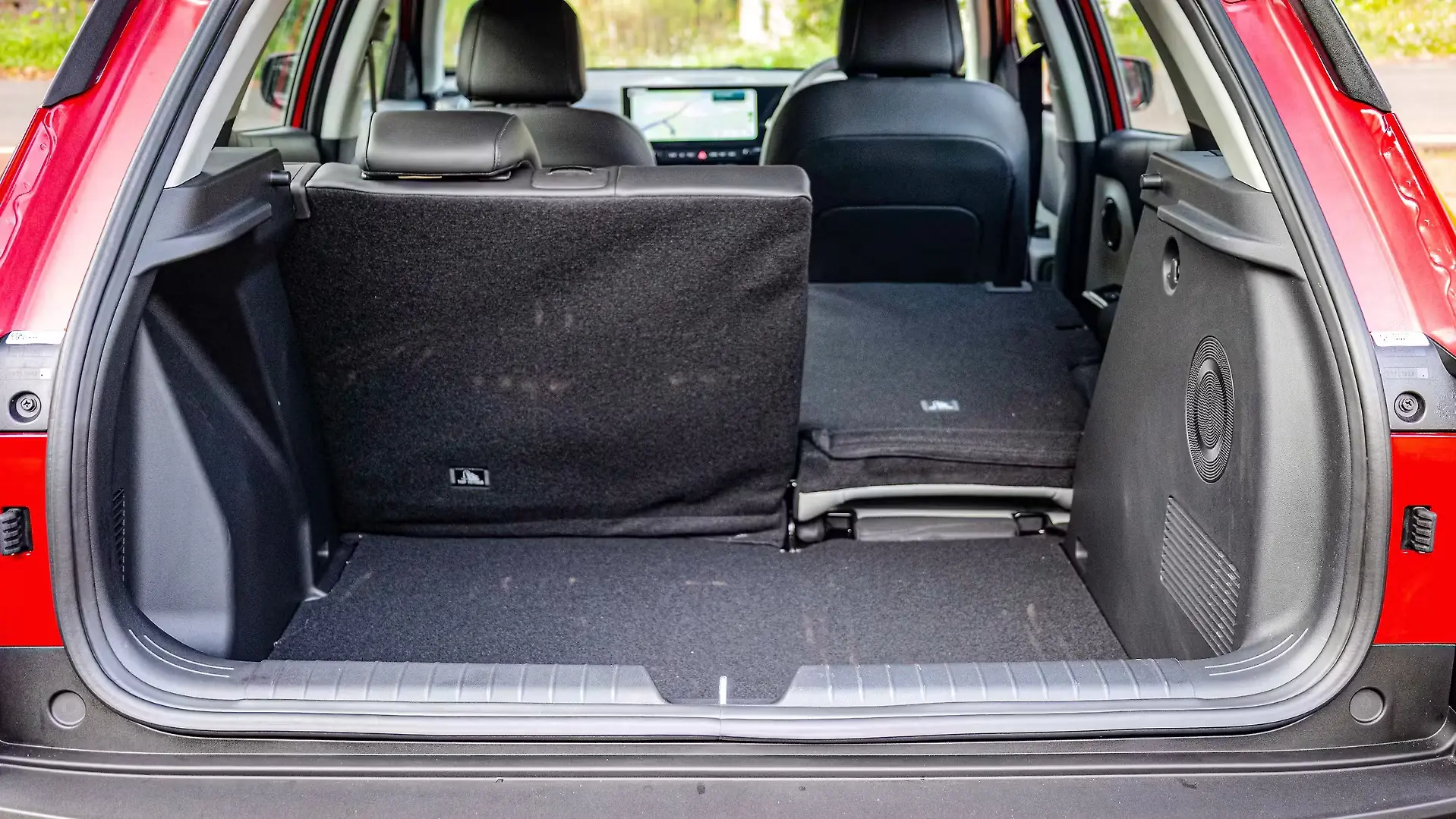
- Boot: 505 litres, the biggest in the segment and 72 litres more than the Creta
That last stat is the sleeper hit. Weekend trips, airport runs, a dog crate plus groceries: the Bayon swallows it all.
Design: a mini Tucson with sharp creases
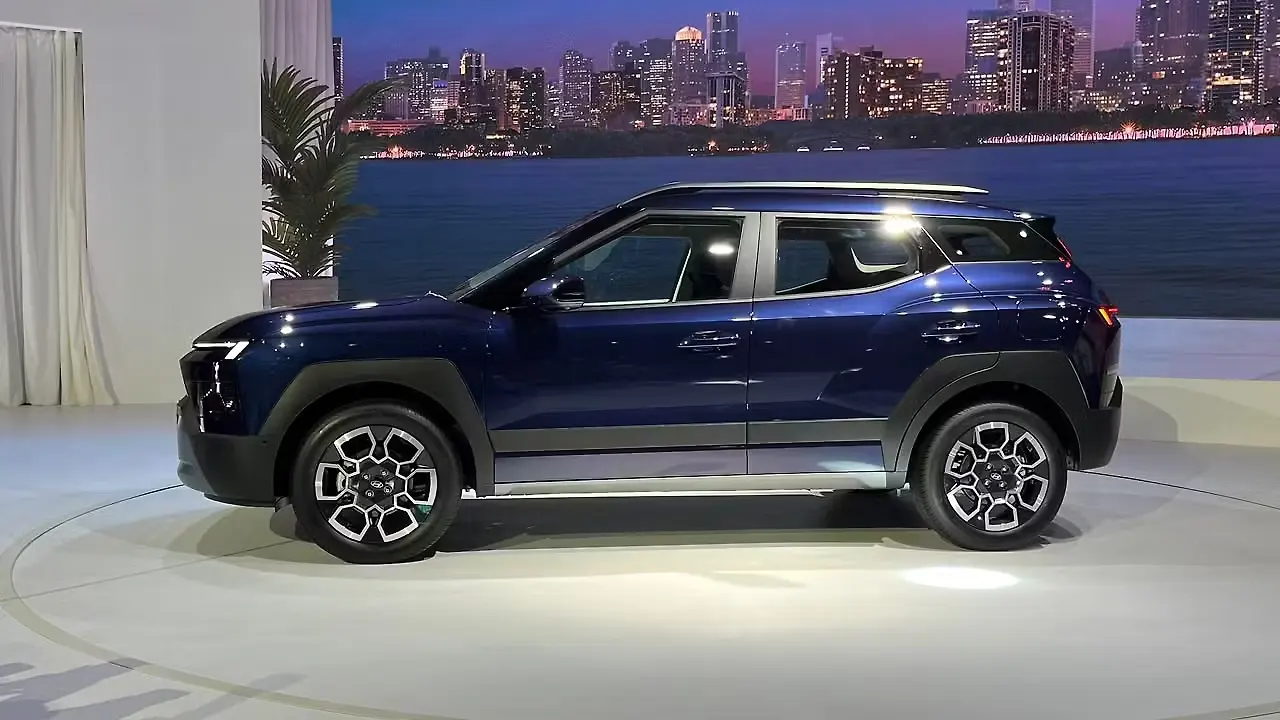
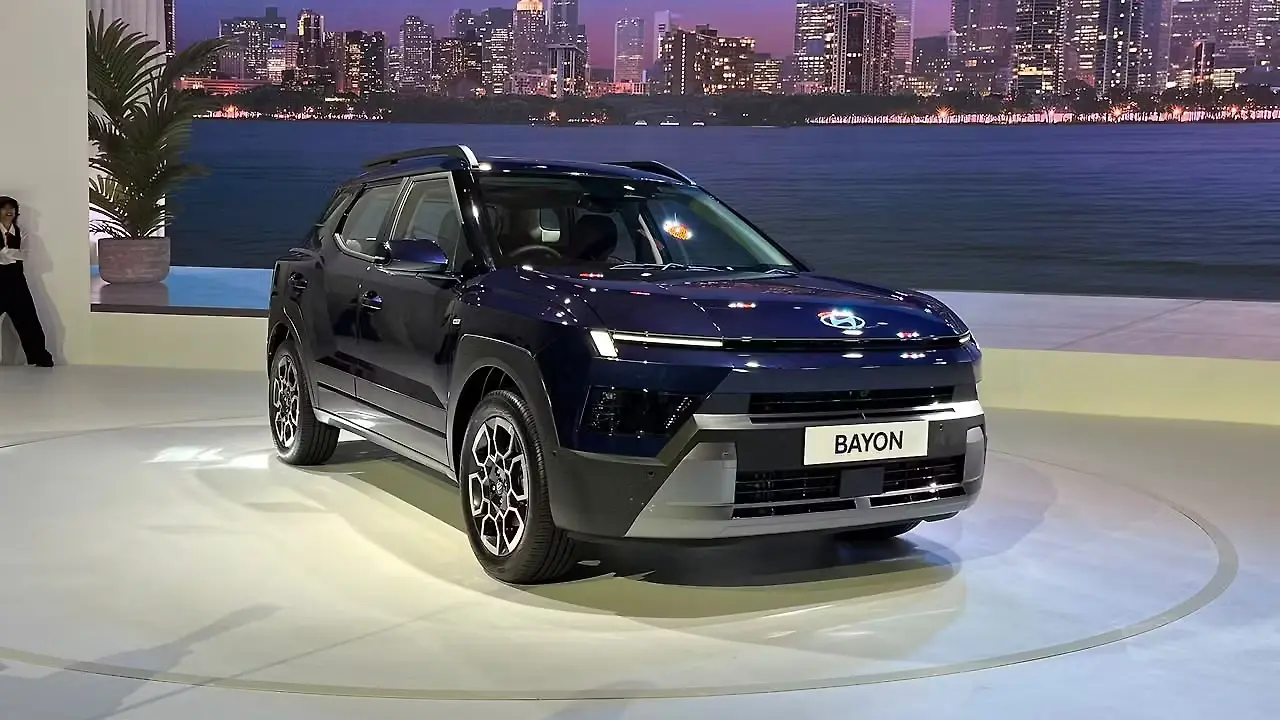
Hyundai calls it “Art of Steel”, and from some angles the Bayon looks like a shrunken new-gen Tucson. That’s a compliment.
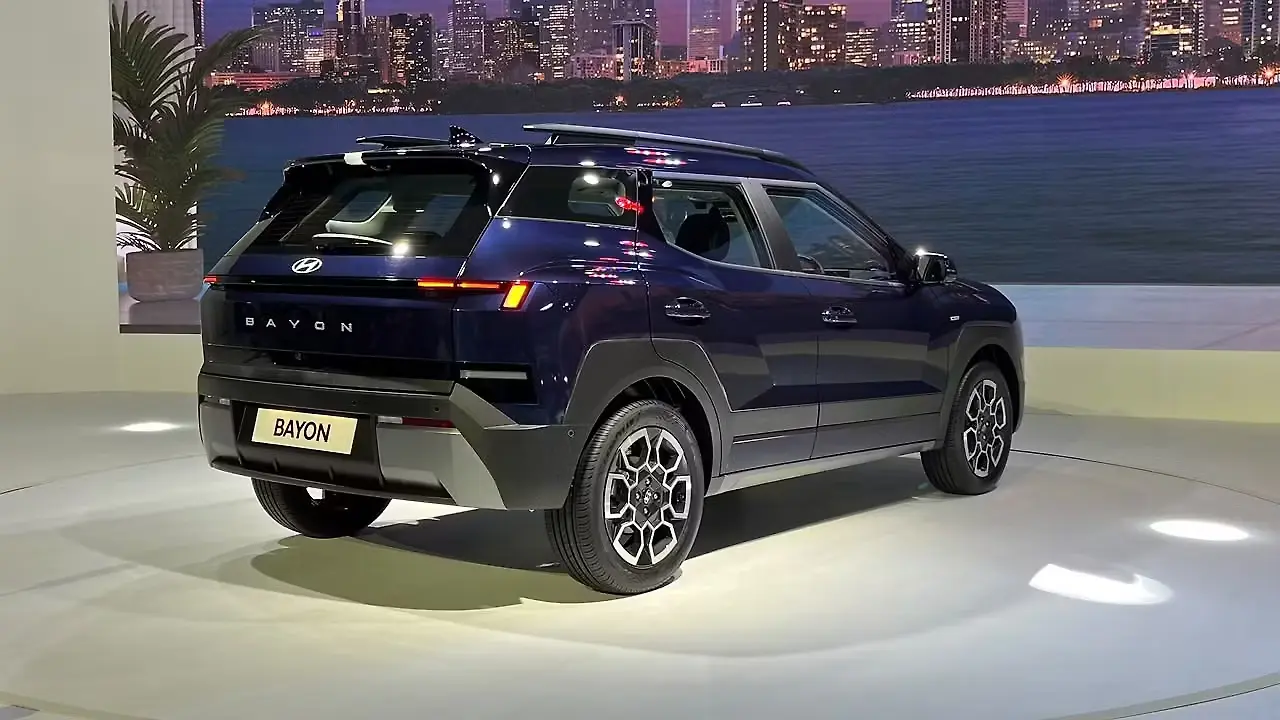
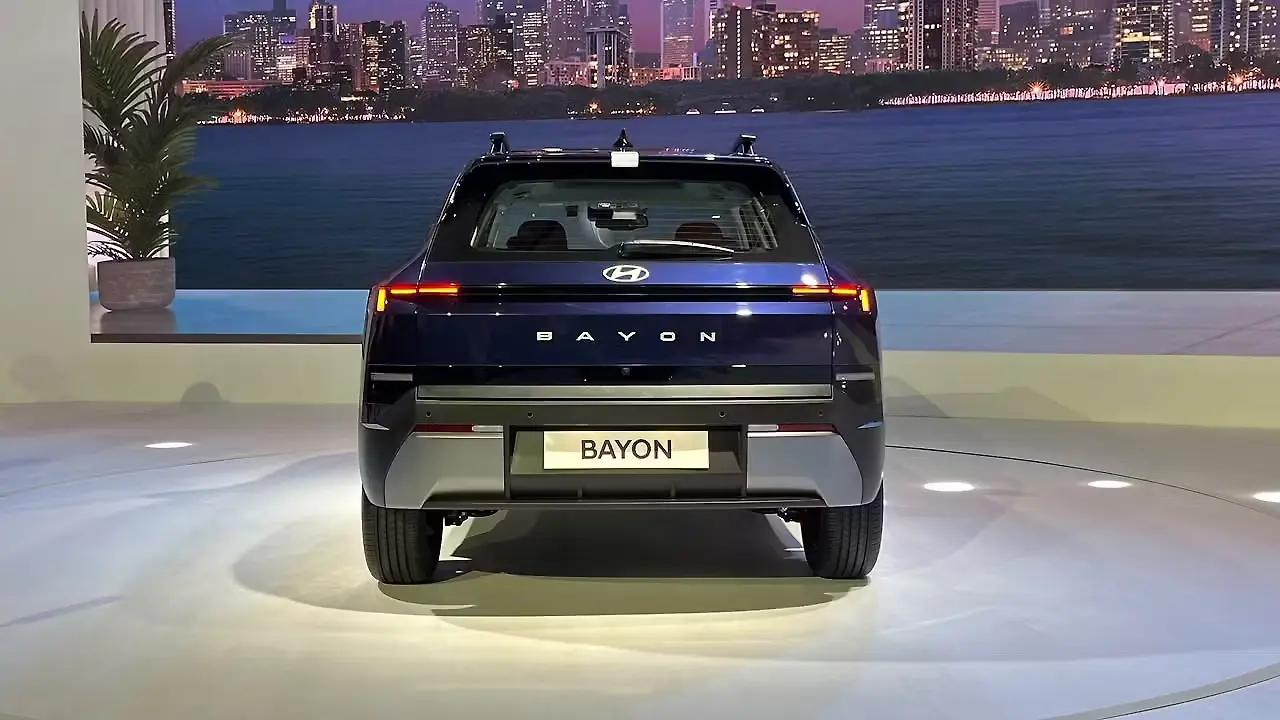
Up front you get LED projector headlamps and L-shaped DRLs that also work as turn indicators. Interestingly, Hyundai skipped the full-width light bar that’s on almost every new SUV right now, which makes the Bayon stand out by not following the trend. The sides have flared wheel arches, chunky black cladding and 17-inch petal-style alloys. At the back there’s a slim black band with LED tail-lamps, bold BAYON lettering and a dual-tone bumper.
One old-school touch: regular pull-type door handles, not flush ones. Less Instagram, more practical. Some will love it, some won’t.
Cabin and tech: screens, Bose and an AI that talks back
This is where Gen Z and the tech crowd will pay attention.
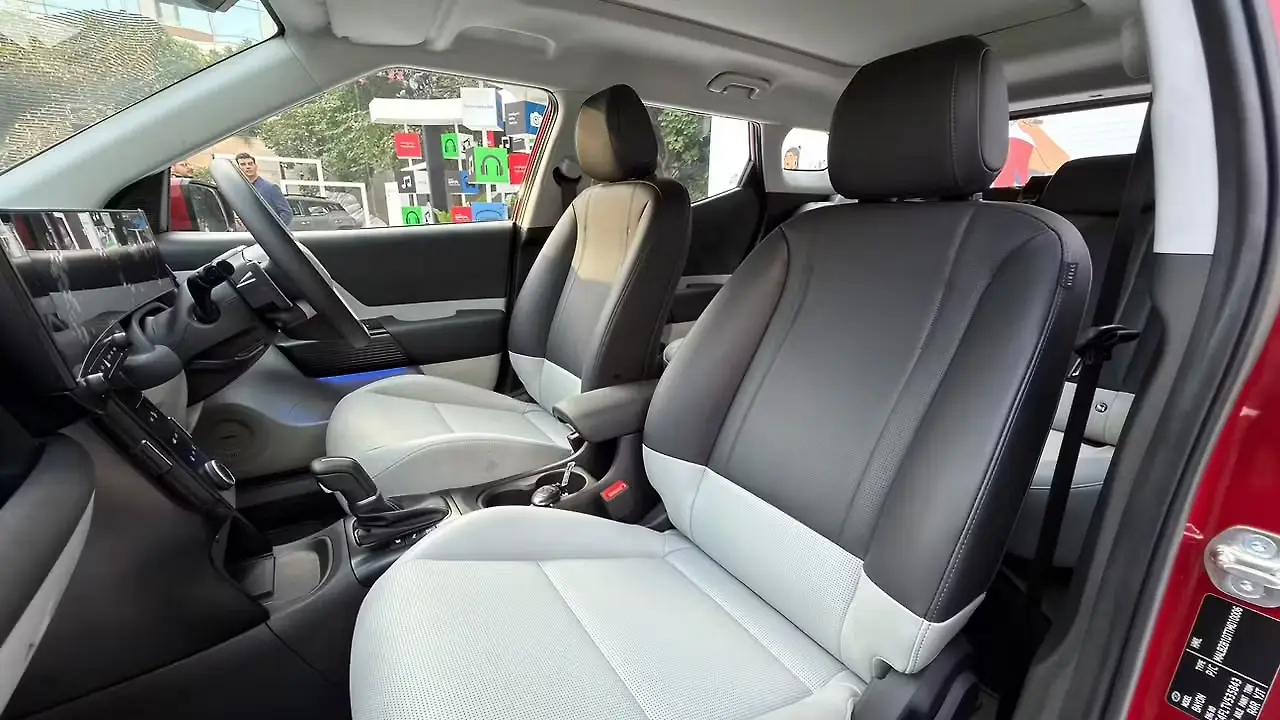
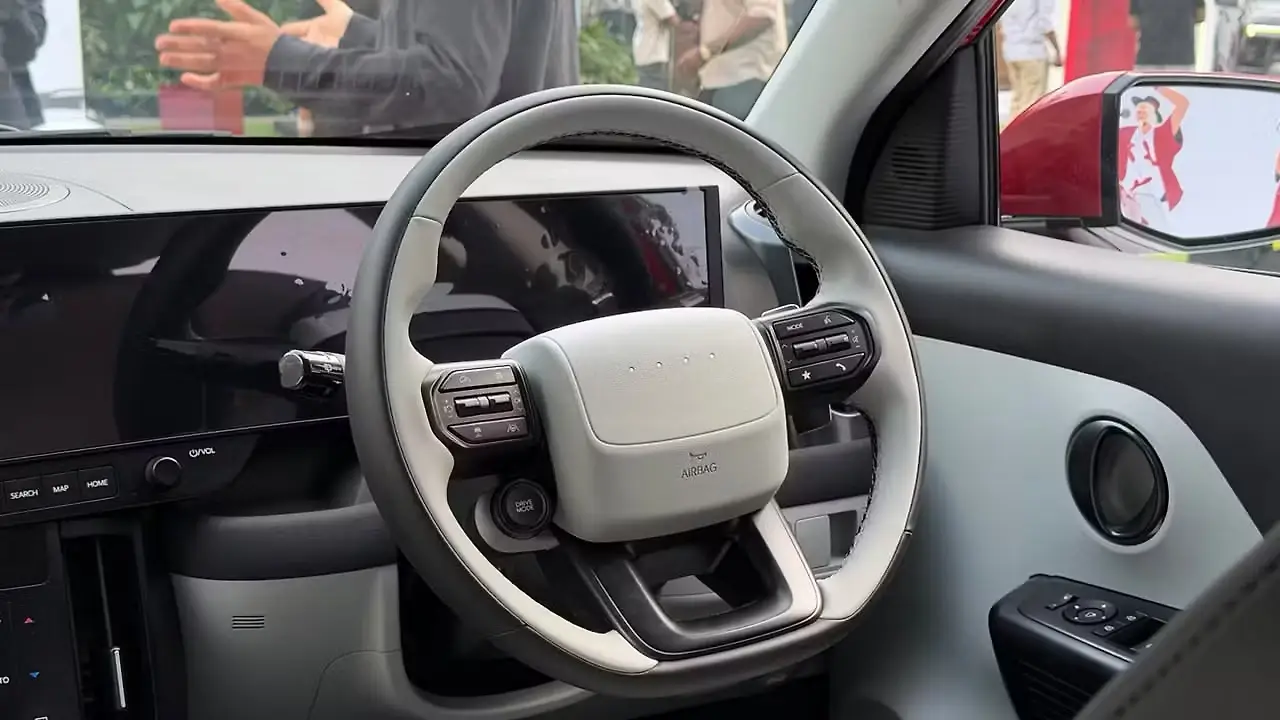
The dashboard is dominated by twin 12.3-inch displays (driver’s display plus a curved touchscreen with wireless Android Auto and Apple CarPlay). Those are bigger than the Creta’s 10.25-inch units. Thankfully, Hyundai didn’t bury everything in menus. There’s a row of physical shortcut buttons, a vertical climate panel with haptic switches, and a separate drive-mode pod on the steering wheel.
The headline feature? Hyundai’s first generative AI voice assistant in India, powered by Perplexity and SoundHound. It can handle navigation, calls, texts, the AC, the sunroof, and even live weather and sports scores, all in natural conversation. There are also 500+ voice commands that work without internet, which is handy when you’re out of network range on a highway.
- Panoramic sunroof
- Ventilated front seats and an 8-way powered driver’s seat
- 8-speaker Bose sound system
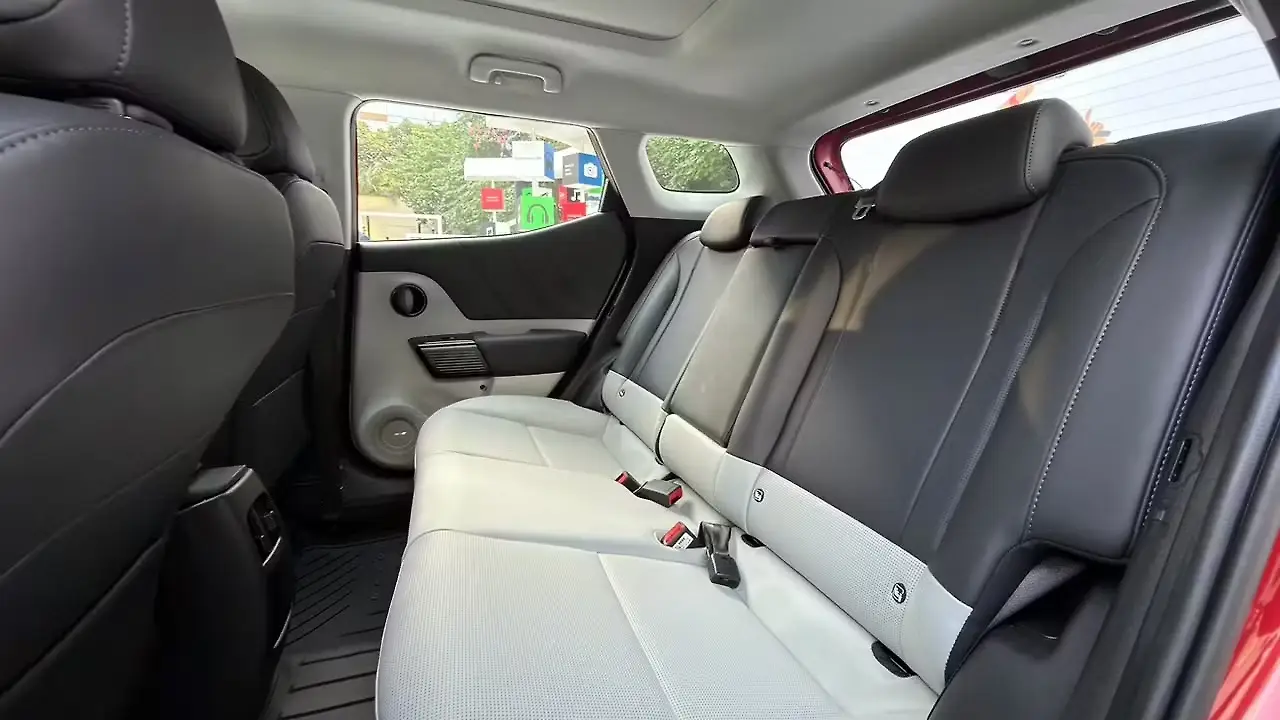
- Two-step reclining rear seats with rear AC vents
- Wireless charging and Type-C ports front and back
- Bluelink connected tech with 70+ features and OTA updates (three years free)
Engine and gearbox: one petrol, two choices
Under the hood is the familiar 1.5-litre naturally aspirated petrol from the Creta: 115hp and 144Nm, paired with a 6-speed manual or a CVT (Hyundai calls it iVT). The CVT has a claimed 18.6 kmpl, which beats the Creta CVT’s 17.7 kmpl.
CVTs usually get criticised for the “rubber band” feel, so Hyundai added two tricks. Dash Boost gives a quick burst of power when you floor it for an overtake, and Sporty Drive Tech firms up the shift feel when you press the pedal harder. You also get Eco, Normal and Sport modes plus paddle shifters.
Autocar India’s experience with this engine is that it’s smooth and efficient, especially with the CVT, which makes it a natural daily commuter. Enthusiasts should be realistic, though. There’s no turbo-petrol and no diesel, so if you want punch, this isn’t the one. Early video drives suggest it’s happiest cruising, not chasing apexes. A CNG version arrives in January 2027.
Safety: Level 2 ADAS and six airbags as standard
Every Bayon gets six airbags, ESC, hill-start assist, ISOFIX and 3-point seatbelts for all seats, with 35+ safety features as standard. Higher variants add Level 2 ADAS with 23 functions. On top variants that includes navigation-based smart cruise control and highway driving assist, which is more advanced than the Creta’s suite.
Other highlights include a 360-degree camera, blind-spot view monitor, disc brakes on all four wheels and an electronic parking brake with auto hold. Hyundai says 69% of the body uses advanced high-strength steel and that it’s engineered for a 5-star rating. The Bharat NCAP result is expected by the end of 2026.
What the Bayon misses
No car is perfect, and the Bayon’s cost-cutting is easy to spot if you’re cross-shopping:
- No powered co-driver seat or “boss mode”
- No powered tailgate, which hurts with a 505-litre boot
- Single-zone climate control only, while the Creta and Seltos offer dual-zone under ₹16 lakh
- No rear sunshades
- No rear wireless charger
- No head-up display, which rivals like the Seltos and Victoris have
- No dashcam (the Creta gets front and rear)
Hyundai Bayon price list and the variant to buy
| Variant | Manual (₹ lakh) | CVT (₹ lakh) |
|---|---|---|
| HX2 | 10.00 | – |
| HX3 | 10.90 | – |
| HX3+ | 11.80 | – |
| HX5 | 12.45 | 13.85 |
| HX6 | 13.57 | 14.97 |
| HX8 | 15.10 | 16.54 |
| HX10 | 16.65 | 18.00 |
All prices ex-showroom.
Our pick: HX8. Autocar India also rates it the sweet spot. You get ventilated seats, the powered driver’s seat, reclining rear seats and rear discs without paying the steep HX10 premium. On a tighter budget, the HX6 is a good middle ground. And unless you really love a clutch, go for the CVT, because Indian city traffic will thank you.
One reality check: a top-spec Venue DCT (₹14.67 lakh) costs slightly less than a mid-spec Bayon HX6 CVT (₹14.97 lakh) and gets a more powerful turbo engine and more kit. So the Bayon only makes sense if you need the space.
Verdict: who should buy the Hyundai Bayon?
The Bayon isn’t trying to be exciting. It’s trying to be the smartest-value midsize SUV in Hyundai’s showroom, and on paper it pulls that off. It has the biggest boot in its class, big screens, a talking AI co-pilot, Level 2 ADAS and a proven petrol-CVT combo, all for less than a Creta.
Buy it if you want space, tech and easy city driving. Skip it if you want turbo thrills, a diesel or every last luxury feature.
What to do now: Book a test drive of the HX8 CVT and drive it back-to-back with a Creta and a Venue Turbo. That one afternoon will tell you more than any spec sheet.
Keep reading Epic Wheels for the full road test once we get more seat time. We’ll update this review with real-world mileage and driving impressions.
Be the first to comment
Leave a Comment
Please log in as a subscriber to leave a comment.
Login to Comment